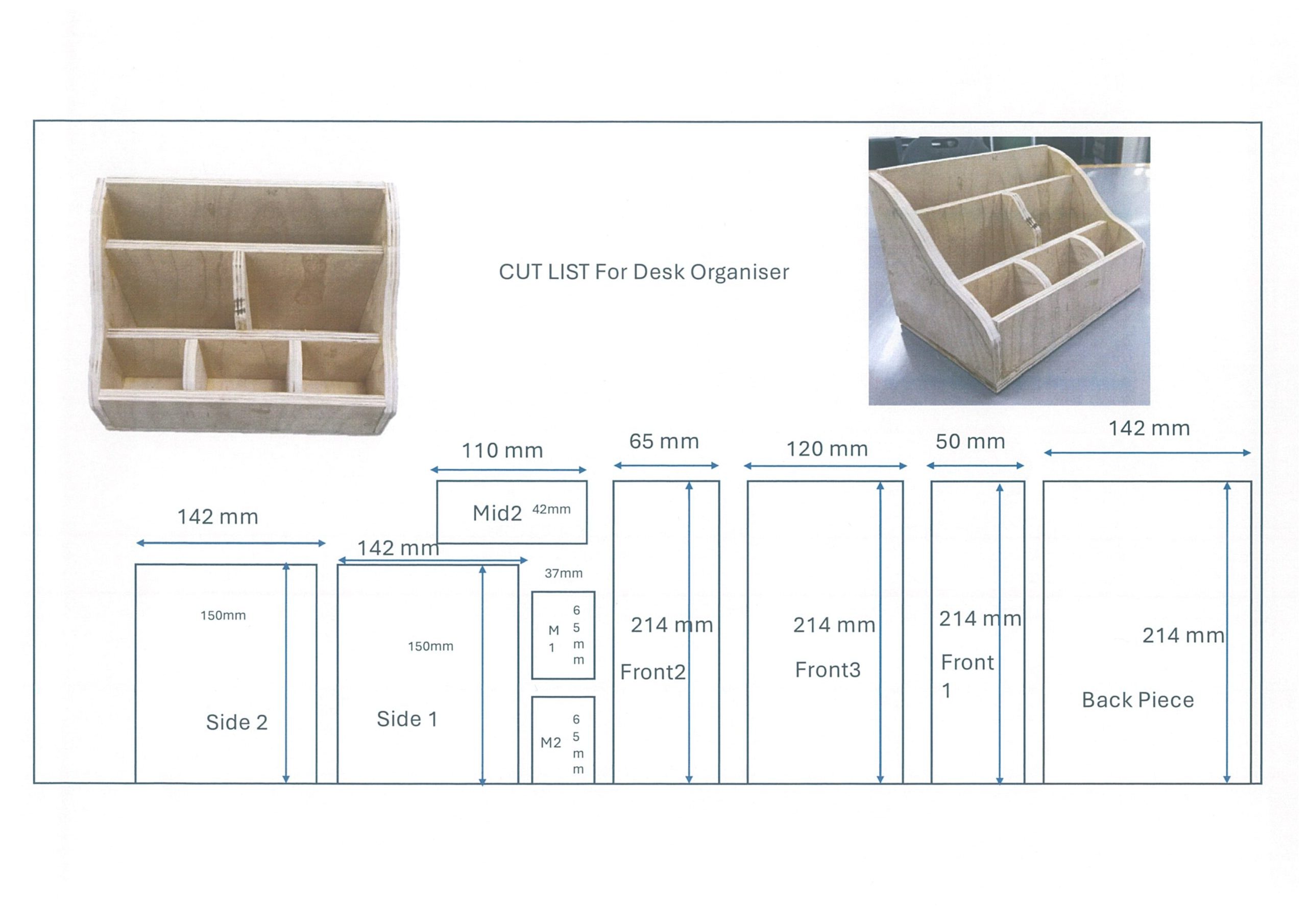
Designing with Purpose: Grade 9 Desk Organizers Workshop.
In our Grade 9 MYP Design class, students recently embarked on a tactile, tool-filled journey into the world of Woodworking through a desk organiser project. This lesson was more than just crafting; it was about understanding design through the lens of material, measurement, and making.
Why Woodworking?
Wood is one of the most versatile and expressive materials in design. By introducing students to wood as a primary medium, we invited them to explore its properties, grain, texture, strength and how these influence design decisions. The desk organiser became a perfect canvas: functional, personal, and open to creative interpretation.
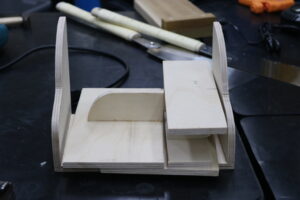
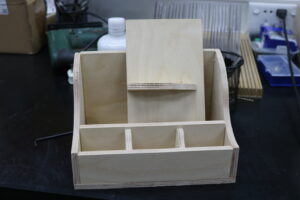
Students’ work.
Tools, Techniques, and Thinking
In our design workshop, students learned to safely and effectively use a range of woodworking tools: saws, files, clamps, sanding blocks, and measuring instruments. Each tool introduced a new layer of precision and possibility. Students practised:
- Accurate measurement and marking
- Cutting and shaping techniques
- Joining and finishing methods
- Iterative design thinking and problem-solving
These technical skills were woven into the MYP Design cycle, encouraging students to investigate, develop ideas, create solutions, and evaluate their outcomes.
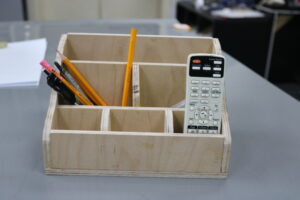
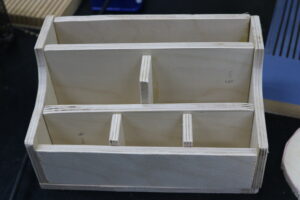
Students’ work.
Measurement as a Design Language
One of the core learning goals was understanding measurement not just as a math skill, but as a language of design. Students translated sketches into scaled drawings, converted dimensions into cuts, and learned how tolerances affect fit and function. It was a powerful way to connect abstract thinking with physical outcomes.
Personalisation and Purpose
Each desk organiser reflected its maker. Some students designed modular compartments for tech accessories, others focused on minimalist aesthetics or eco-conscious reuse of scrap wood. The diversity of outcomes highlighted the power of design to meet individual needs while solving shared problems.
Reflections from the Workshop
Students shared that they felt “empowered by the tools,” “surprised by how precise they could be,” and “proud to make something useful with their own hands.” For many, it was their first experience working with wood—and it sparked curiosity about engineering, architecture, and product design.
No Comments