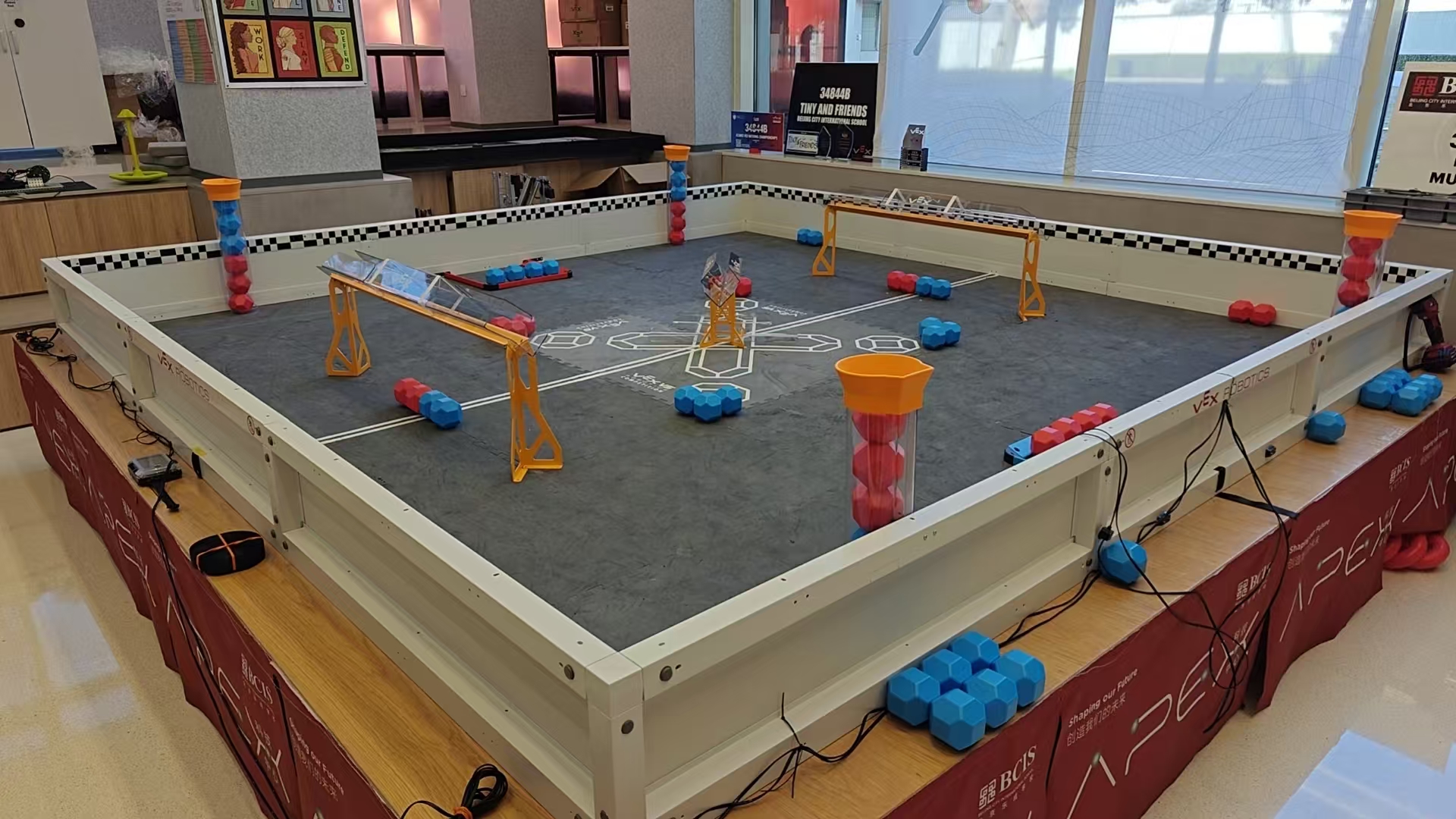
16 Hours of Innovation:VEX Robotics “Pushback” Challenge.
This past weekend, the Design Department at Beijing City International School (BCIS) hosted a high-energy, 16-hour VEX Robotics building challenge focused on the newly released 2025/2026 VEX Game: Pushback. From 7:00 AM to 11:30 PM, our campus transformed into a hub of creativity and collaboration, welcoming over 60 students and 20 teachers from Dalian, Tianjin, and Beijing.
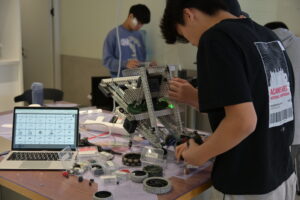
As a Design Technology teacher and event organizer, I was proud to help shape this experience—not only as a competition, but as a launchpad for the new VEX season. Our goal was to foster deep learning, spark curiosity, and build a sense of community across schools.
Preparing for the Season Ahead
This wasn’t just a one-off event—it was a strategic kickoff for the 2025/2026 VEX Robotics season. Students and teachers came together to study the Pushback game, analyze its mechanics, and begin planning their team strategies. The challenge presented a rare opportunity to prototype early ideas, test build concepts, and receive feedback in real-time.
The IB Design Cycle in Action
The entire day was a living example of the IB MYP and DP Design Cycle, where students moved fluidly through each phase:
- Inquiring and Analyzing: Teams began by exploring the Pushback game manual, identifying key constraints and opportunities. They researched past VEX strategies and asked critical questions about design feasibility and performance.
- Developing Ideas: Sketches, CAD models, and brainstorming sessions filled the rooms. Students documented their thinking, compared concepts, and refined their strategies collaboratively to enhance their understanding.
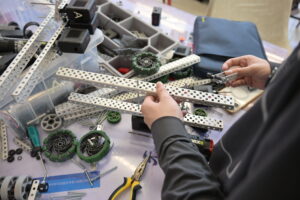
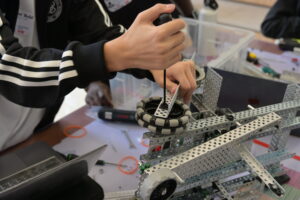
- Creating the Solution: With limited time and materials, teams built rapidly. Motors whirred, gears meshed, and frames took shape. Iteration was constant—designs were tested, tweaked, and rebuilt as teams responded to real-time challenges.
- Evaluating: The day culminated in a mini-competition, where each team’s robot faced off in friendly matches. Students reflected on their performance, discussed what worked, and identified areas for improvement. Teachers facilitated peer reviews and encouraged self-assessment aligned with MYP and DP criteria.
Learning Beyond the Classroom
This challenge was deeply interdisciplinary. Students practised collaborative problem-solving, ethical decision-making, and resilience in the face of pressure. They communicated across cultures, supported one another, and celebrated each team’s unique approach. The event also reinforced key ATL (Approaches to Learning) skills: research, communication, self-management, and critical thinking.
A Shared Vision for Design Education
As a Design educator, events like this are essential. They remind us that design is not just about making things—it’s about making meaning. Whether students pursue engineering, entrepreneurship, or education, the skills they honed during this challenge will serve them for life.
We look forward to more collaborative opportunities where students can design, build, reflect, and grow, just like they did during Pushback.
No Comments